Every year brings a fresh list of web design trends, and 2026 is no different: bento grid layouts, mandatory dark mode, AI-adaptive pages that rearrange themselves for each visitor. For a Norwich small business with a fixed budget, the real question is not which trends look impressive in an agency blog post, but which ones actually change how many enquiries your website brings in. Some of this year's trends are cosmetic. One of them is quietly becoming a legal requirement. Here is how we would prioritise a small business budget across what is genuinely worth paying for in 2026.
The trend that is actually a legal requirement: accessibility
The European Accessibility Act takes effect in 2026, and in the UK the Equality Act already requires reasonable adjustments so disabled visitors can use your website. This is not a design trend in the usual sense, it is a compliance requirement with real legal exposure, and it happens to also be good design. Accessible websites tend to have clearer navigation, better colour contrast, sensible heading structure and forms that actually work, all of which help every visitor, not only the ones using assistive technology.
- Sufficient colour contrast between text and background, checked, not guessed.
- Every image carries meaningful alt text, not a filename or a blank tag.
- Forms have visible labels and clear, specific error messages.
- The whole site is usable from a keyboard alone, without a mouse.
Dark mode is now an expectation, not a design choice
A large majority of visitors now browse with dark mode switched on at the device level. Supporting it properly, rather than leaving a site to render with jarring pure-white flashes or broken contrast in dark browsers, is closer to a baseline expectation than a stylistic trend. It is also far cheaper to build in from the start than to retrofit once a site has grown to dozens of pages and components.
Bento grid layouts: a useful pattern, not a full redesign
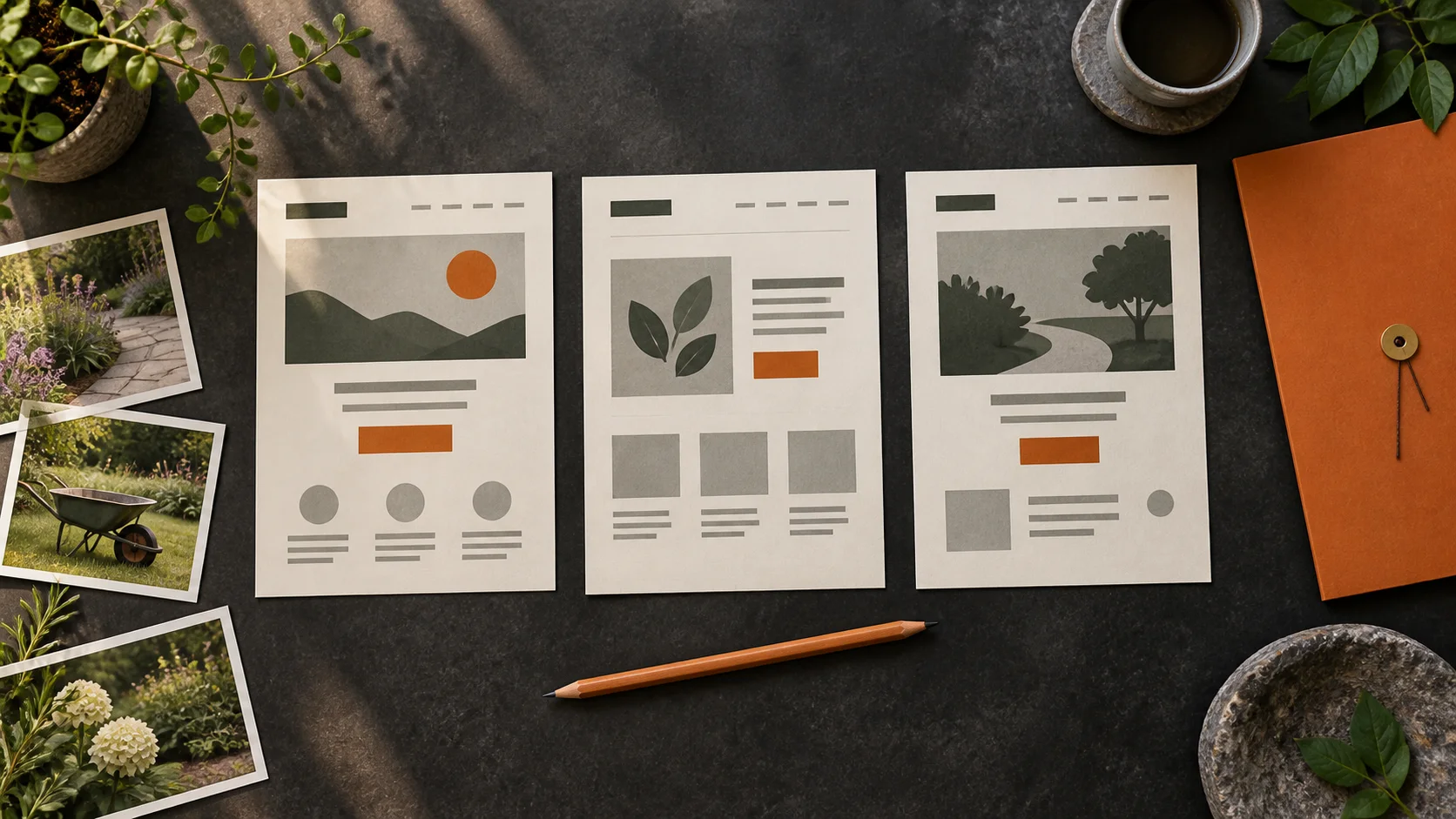
Bento grids, named after the compartmentalised lunch box, organise a page into a mix of differently sized rectangular panels. They genuinely suit mobile-first layouts and can showcase several services or proof points at once without a wall of identical cards. The mistake is treating a bento grid as a whole design language rather than one pattern among several. Used everywhere, on every page, it starts to feel like a template rather than a considered layout built around your actual content.
AI-adaptive layouts: promising, but early for most small budgets
Some larger platforms are experimenting with pages that rearrange content, imagery and calls to action in real time based on visitor behaviour and history. It is an interesting direction, but for most Norwich small businesses the return on that complexity is not there yet. A well-built chatbot answering real customer questions, or a clearly structured page that already accounts for your main customer types, tends to deliver more practical value right now than dynamic personalisation.
Lean, fast code is a trend that never actually goes away
Speed and lightweight code keep resurfacing under different names, sustainable web design, green hosting, performance-first builds, because the underlying benefit never changes. A page built from clean, modern code with only the scripts it genuinely needs loads faster, ranks better and costs less to host than one carrying years of accumulated plugins and tracking tags. Every other trend on this list matters less if the page itself is slow.
- Fewer third-party scripts means less to slow the page down and less to maintain.
- Modern image formats keep pages light without visibly reducing quality.
- Clean code is also easier and cheaper to maintain as the site grows.
How we would prioritise a small business budget
If you only have room for some of this in 2026, prioritise in this order.
- Accessibility and mobile usability first, because they carry legal weight and affect every visitor.
- Speed and clean code second, because every other trend performs worse on a slow site.
- Dark mode support third, because it is cheap to build in properly from the start.
- Bento-style layout and AI personalisation last, treated as decoration on top of a solid foundation, not a substitute for one.
Where Mousehold Studio fits in
We build every website with accessibility, mobile performance and clean modern code as the starting point, not an afterthought bolted on before launch. That means the trend-chasing decisions, dark mode, bento-style sections, AI features, get made deliberately and only where they genuinely suit your business, rather than because a trend list said to include them.
The bottom line
Most 2026 web design trends are optional. Accessibility, speed and mobile usability are not. Build on the right foundation with our Norwich web design service, keep it fast and current with ongoing website care, or talk to Mousehold Studio about your next redesign.