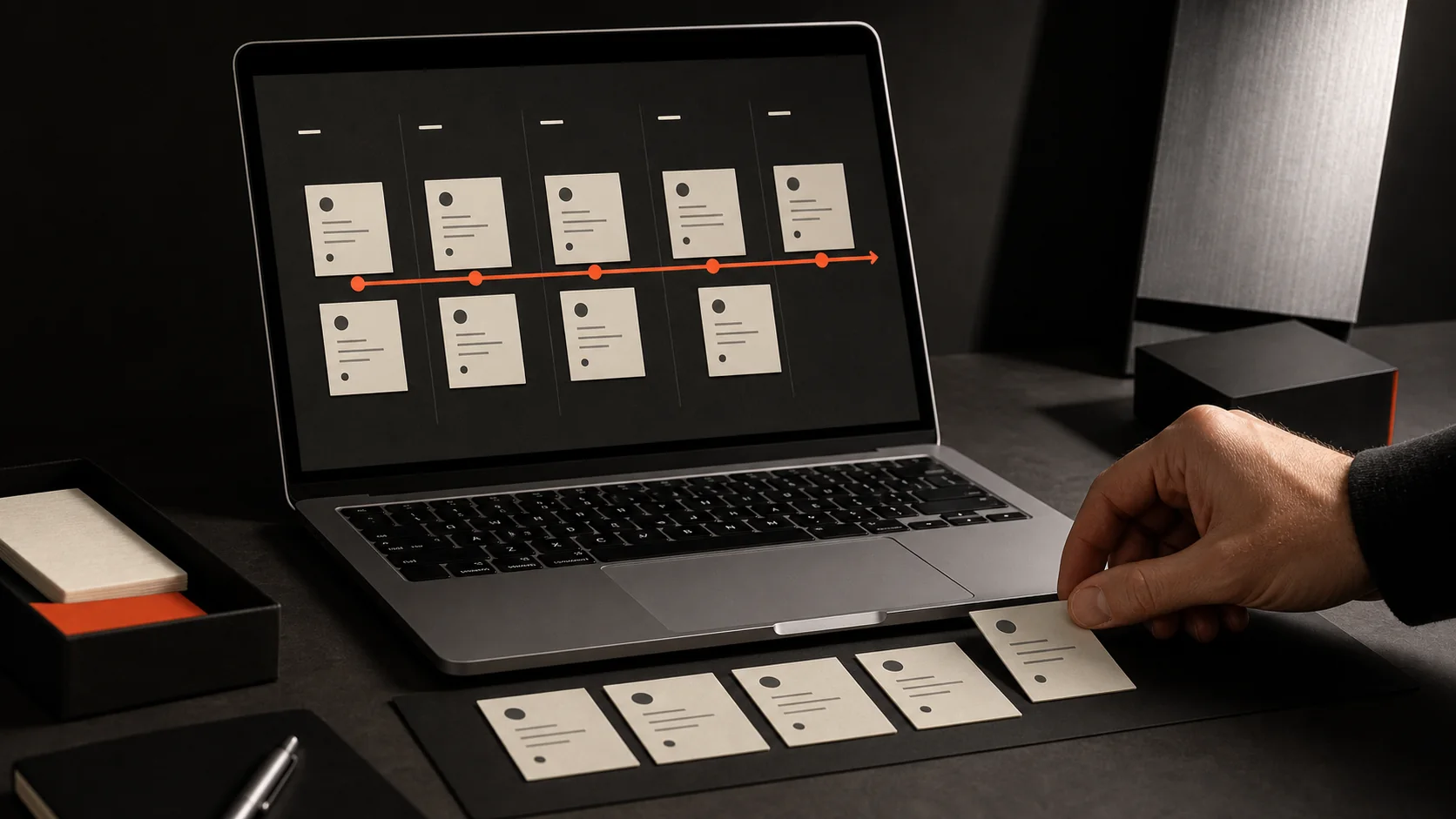
A mobile app is only worth building when it solves a real business problem better than a website, spreadsheet or off-the-shelf tool. For small businesses, React Native is often the practical route because one codebase can ship to iOS and Android, keeping the first version focused and maintainable.
When a business app makes sense
A custom mobile app becomes useful when customers, staff or managers need to complete a workflow regularly from a phone. That might mean booking appointments, checking job status, uploading site photos, receiving push notifications or accessing operational data away from a desk.
Common app types for small businesses
The best app ideas usually come from repeated friction, not from wanting to be in the App Store. If a process happens every day and mobile access would make it faster, it may be app-shaped.
- Customer booking apps for appointments, payments, reminders and account management.
- Field staff apps for jobs, checklists, photos, signatures and offline notes.
- Internal operations apps for managers who need live visibility on the move.
- Customer portals for documents, progress updates, invoices or support requests.
- Companion apps that connect to an existing website, dashboard or CRM.
Why React Native is a good fit
React Native lets us build real mobile apps for iPhone, iPad and Android from a shared TypeScript codebase. For many business apps, that means a faster build, one design system, one set of updates and a more realistic budget than building two separate native apps.
The app needs a backend too
A mobile app is rarely just screens. It needs accounts, permissions, data storage, notifications, admin tools and integrations. The backend is where booking rules, staff roles, customer records and reporting usually live.
What to scope first
The first version should focus on the workflow that creates the most value. A small app that the team uses every day is stronger than a large app full of features nobody trusts yet.
- Who uses it: customers, field staff, managers, office staff or all of them.
- The main job to be done, such as booking, updating, checking, uploading or approving.
- The data it needs from your existing systems.
- Offline needs, push notifications and device features like camera or signatures.
- The admin interface needed to manage users, content and settings.
How Mousehold Studio approaches mobile apps
We design the workflow first, then build the app and backend as one connected product. For many clients, the mobile app sits alongside a website, dashboard, AI chatbot or automated call flow so the whole customer journey is connected.
The bottom line
React Native mobile app development is worth exploring when mobile access would make a repeated business workflow faster, clearer or more reliable. Start with one useful job, connect it to the right backend and build from real operational need. Get an instant mobile app estimate to see where your project fits.