Most local business websites are not failing because the owner does not care. They are failing because the site was built once, left alone, and never reviewed against how customers actually search, compare and enquire. When we audit websites for Norwich and Norfolk businesses, the same practical problems come up repeatedly. None of them are glamorous, but fixing them can make a serious difference.
The homepage tries to do everything
A lot of local websites rely on one homepage to explain every service, every location and every reason to trust the business. That makes the page vague. Search engines struggle to understand what each service is about, and customers struggle to find the information that matches their problem.
Service pages are too thin
Strong service pages answer the questions customers ask before they enquire. What do you offer? Where do you work? What does the process look like? What should the customer expect? Thin pages miss those questions, which hurts both search visibility and trust.
- Each core service should have a focused page or section with its own search intent.
- Local wording should be natural, not stuffed awkwardly into every sentence.
- Trust signals should sit close to decision points, not hidden on a separate page.
- Calls to action should match the service, such as request a quote, book a call or check availability.
The Google Business Profile is underused
For local SEO, the Google Business Profile is not an afterthought. It affects map visibility, customer trust and click behaviour. We often find missing services, weak descriptions, limited photos, unanswered reviews and inconsistent business details across directories.
Mobile pages look acceptable but feel slow
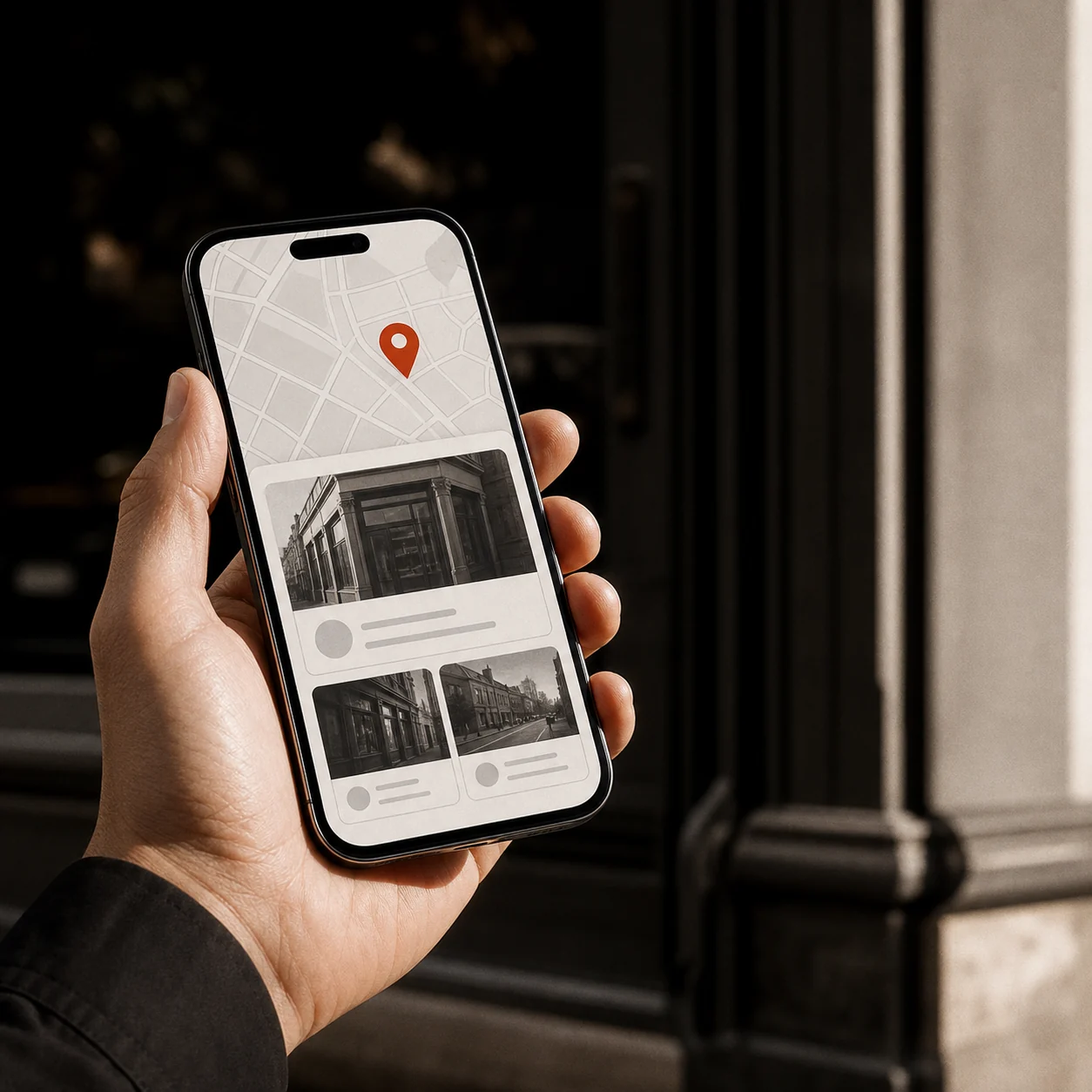
A site can look fine in a screenshot and still feel poor on a phone. Large images, plugin-heavy pages, awkward forms and unclear buttons all reduce enquiries. Mobile performance matters because many local customers search at the exact moment they need help.
There is no clear conversion path
The best local websites make the next step obvious. Call, book, request a quote, send a message. We often see pages with multiple competing buttons, buried contact details or forms that ask for too much too early. Clarity usually beats cleverness.
How we help local businesses fix it
We start with the highest-leverage problems first. That might be rewriting service pages, improving internal links, fixing technical SEO, improving the Google Business Profile, setting up conversion tracking or rebuilding the website if the platform is the real blocker.
- Website structure aligned around services, locations and customer intent.
- SEO titles, descriptions and headings rewritten for real local searches.
- Faster mobile pages with cleaner image and code foundations.
- Tracking that shows which pages and channels are creating enquiries.
The bottom line
A website audit is not about producing a long report that sits in a folder. It is about finding the gaps that cost enquiries and fixing them in the right order. If your site gets traffic but not enough calls, bookings or quote requests, an audit is usually the fastest way to see what is holding it back.